Crazy Egg shows where shoppers click and scroll. Beseam connects that pattern to what may be getting in the way.
Crazy Egg is a heatmap and A/B testing tool that shows where visitors click, scroll, and drop off on a page. Beseam treats that evidence as one signal around what the shopper chooses alongside catalog, AI discovery, campaigns, incidents, and booked revenue.
Behavior analytics · reviewed July 25, 2026
Choose Crazy Egg when
Choose Crazy Egg when your team needs fast, visual heatmaps, scrollmaps, and simple A/B tests on individual pages.
Choose Beseam when
Choose Beseam when heatmap data must be connected to a product, page, campaign, business impact, owner, and verified change.
Use both when
Keep Crazy Egg for heatmaps, scrollmaps, and lightweight page tests. Beseam ranks which pattern matters most to the business and keeps the issue moving through change and check.
What it does not replace
What Beseam does not replace
Beseam is not a replacement for Crazy Egg's heatmap, scrollmap, or page-level A/B testing interface.
Choose the tool that fits the job.
Choose Crazy Egg when
- Heatmaps and scrollmaps are the fastest way your team spots a page that isn't working.
- You need simple, page-level A/B tests without a full experimentation platform.
- A marketing or design team needs quick visual evidence without engineering support.
Choose Beseam when
- The team already has heatmap data but lacks a reliable way to decide which pattern deserves action.
- The issue must be connected to product, catalog, campaign, or revenue context.
- You want the proposed change and the result to stay with the original finding.
Compare how each tool works.
Primary job
Show where visitors click, scroll, and drop off through heatmaps and simple page tests.
Combine behavior with the rest of store and sales data and rank the issue that should be acted on.
Evidence depth
Visual, page-level click and scroll data.
Cross-system context tied to products, pages, queries, channels, incidents, and revenue periods.
Prioritization
Teams interpret heatmaps and scrollmaps to decide what to test.
Revenue-sensitive issues rise above operational noise using evidence and business impact.
Action
Changes happen in the page builder or CMS after the insight is found.
The affected product, page, query, or journey, owner, approval, and change status stay together.
Best relationship
Visual, page-level behavior source.
Connects heatmap data to what the shopper chooses, approved change, and measured result.
What happens after the signal appears?
Observe friction
A heatmap or scrollmap reveals a page visitors abandon or ignore.
Behavior is connected to the affected product, page, segment, order window, and other live signals.
Decide what matters
The team reviews maps and decides which page is worth testing.
The heatmap data is considered alongside AI discovery, catalog, campaign, and reliability data to surface what deserves action first.
Change the experience
A simple A/B test or page edit ships directly in Crazy Egg.
The product, page, query, or journey and recommended change remain explicit, and the brand owner approves before any customer-facing change is applied.
Learn from the result
The team revisits the heatmap or test result after release.
The original problem is checked again and the measured result becomes evidence for the next decision.
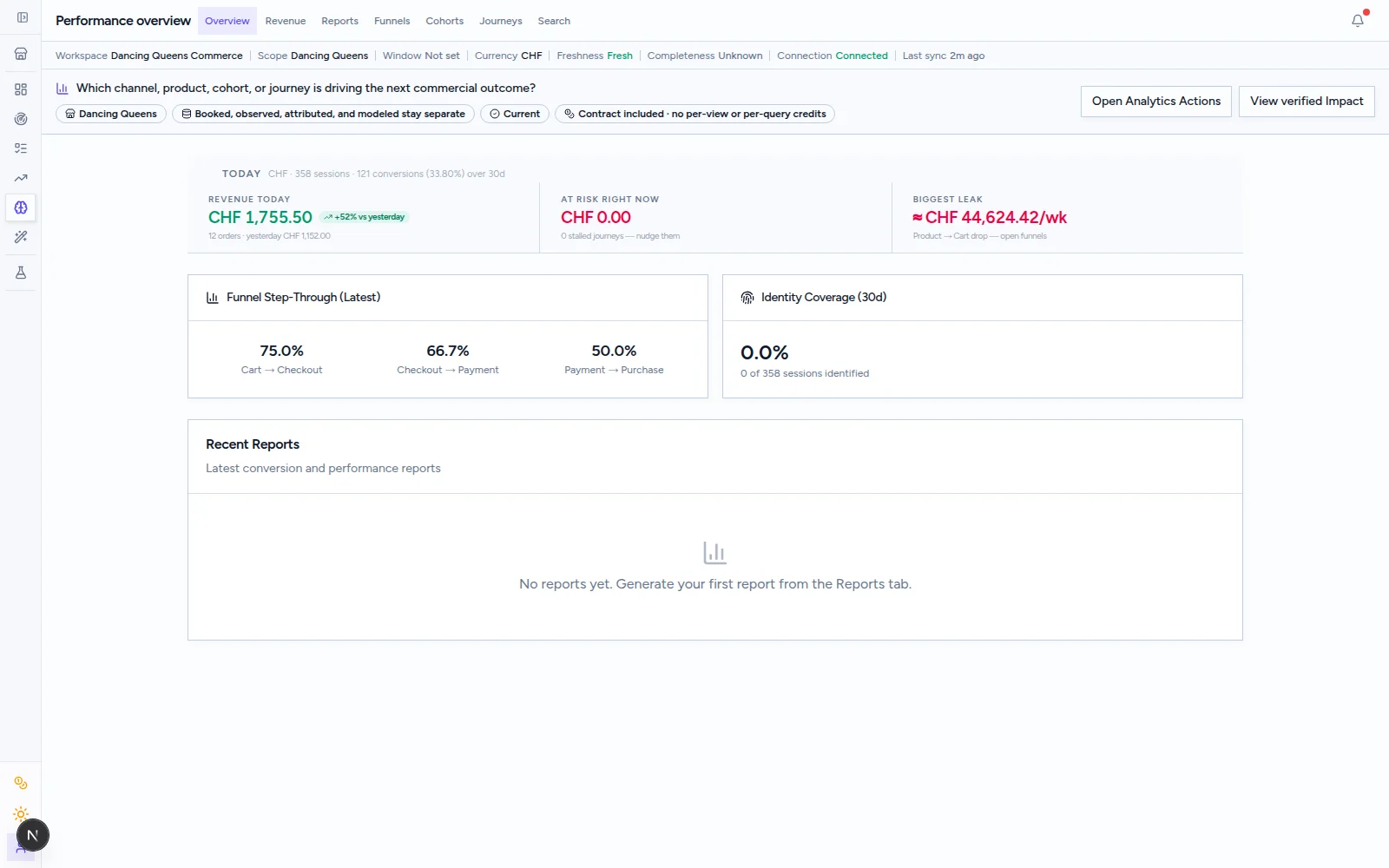
Real Beseam revenue analytics. A heatmap signal for a dancewear store stays attached to what the shopper chooses, owner, action, and measured result instead of becoming a detached insight.
FAQ
Before you change the stack.
Does Beseam replace Crazy Egg?
No. Crazy Egg's heatmaps, scrollmaps, and simple page tests can stay in place. Beseam connects what they surface to the other product, store, and shopper data, the decision about what to change, and the result afterward.
Can Crazy Egg and Beseam be used together?
Yes. Crazy Egg can supply visual page data while Beseam connects the issue to the other product, store, and shopper data, surfaces what deserves action, and measures the relevant data afterward.
What does Beseam add beyond a heatmap?
Beseam connects observed friction to the affected product, page, query, or journey, other systems, business impact, owner, and the result after a change is made.
Sources reviewed
Official product sources · July 25, 2026
Related comparisons
Keep the systems that work. Connect the evidence they leave apart.
In a 20-minute store review, we use one real finding to show how Beseam connects the tools already in place and keeps the loop moving from evidence to measured change.