Mixpanel explains product behavior. Beseam connects it to what shoppers find, choose, and buy.
Mixpanel is built for self-serve product analytics: funnels, retention, cohorts, and flows that show how users move through a product. Beseam connects storefront, catalog, AI discovery, campaigns, behavior, reliability, and booked revenue to keep observing the wider pattern, connect what may explain it, and surface what deserves action.
Product analytics · reviewed July 25, 2026
Choose Mixpanel when
Choose Mixpanel when product and growth teams need fast, self-serve funnel, retention, and cohort analysis on events.
Choose Beseam when
Choose Beseam when the same drop shows up across storefront, catalog, campaigns, behavior, and orders, and the team needs the evidence connected to what the shopper chooses instead of another chart.
Use both when
Keep Mixpanel as the event-analysis tool product teams already query. Run Beseam alongside it to connect event data with what the shopper chooses, the merchant's decision about what to change, and the measured result.
What it does not replace
What Beseam does not replace
Beseam is not a replacement for Mixpanel's event-based funnel, retention, cohort, and flow analysis, or the self-serve query processes product teams already run on it.
Choose the tool that fits the job.
Choose Mixpanel when
- Product and growth teams need self-serve funnel, retention, and cohort queries without waiting on an analyst.
- The question is behavioral and event-based: activation, retention, or feature adoption.
- Your team already has a mature Mixpanel event taxonomy and dashboard process.
Choose Beseam when
- The same revenue problem spans storefront, catalog, campaigns, behavior, and order data, not just product events.
- Teams need to know what to change next, not just another funnel to interpret.
- The finding, owner, approval, change, and result need to stay together.
Compare how each tool works.
Primary job
Analyze user events through funnels, retention, cohorts, and flows.
Connect store and sales data from different systems to a specific decision, approved change, and measured result.
Data scope
Instrumented product and app events, users, and groups.
Storefront, catalog, customer journeys, AI answers, campaign readiness, incidents, and booked commerce data.
What the team receives
Self-serve reports, funnels, and cohort breakdowns.
A specific issue tied to a product, page, query, journey, or channel, with evidence and an owner.
Change and check
Usually handled in another process or platform.
The proposed change, approval, application, and the before-and-after check remain attached to the finding.
Best relationship
Self-serve system of record for product event analysis.
Commerce decision and action layer that can sit alongside Mixpanel without replacing it.
What happens after the signal appears?
Detect the drop
A funnel or retention report shows a change in activation or conversion.
The same change is connected to affected products, pages, campaigns, incidents, and order windows.
Decide what matters
A product manager queries cohorts and builds a hypothesis.
Beseam compares evidence by business impact and confidence and surfaces which issue deserves action first.
Make the change
The team moves into a CMS, commerce platform, ad platform, or ticketing tool.
The affected product, page, query, or journey and proposed change remain explicit, with brand-owner approval before any customer-facing change is applied.
Check again
The team returns to Mixpanel and interprets the new funnel.
Beseam checks again the original problem and keeps booked, attributed, observed, and modeled money separate.
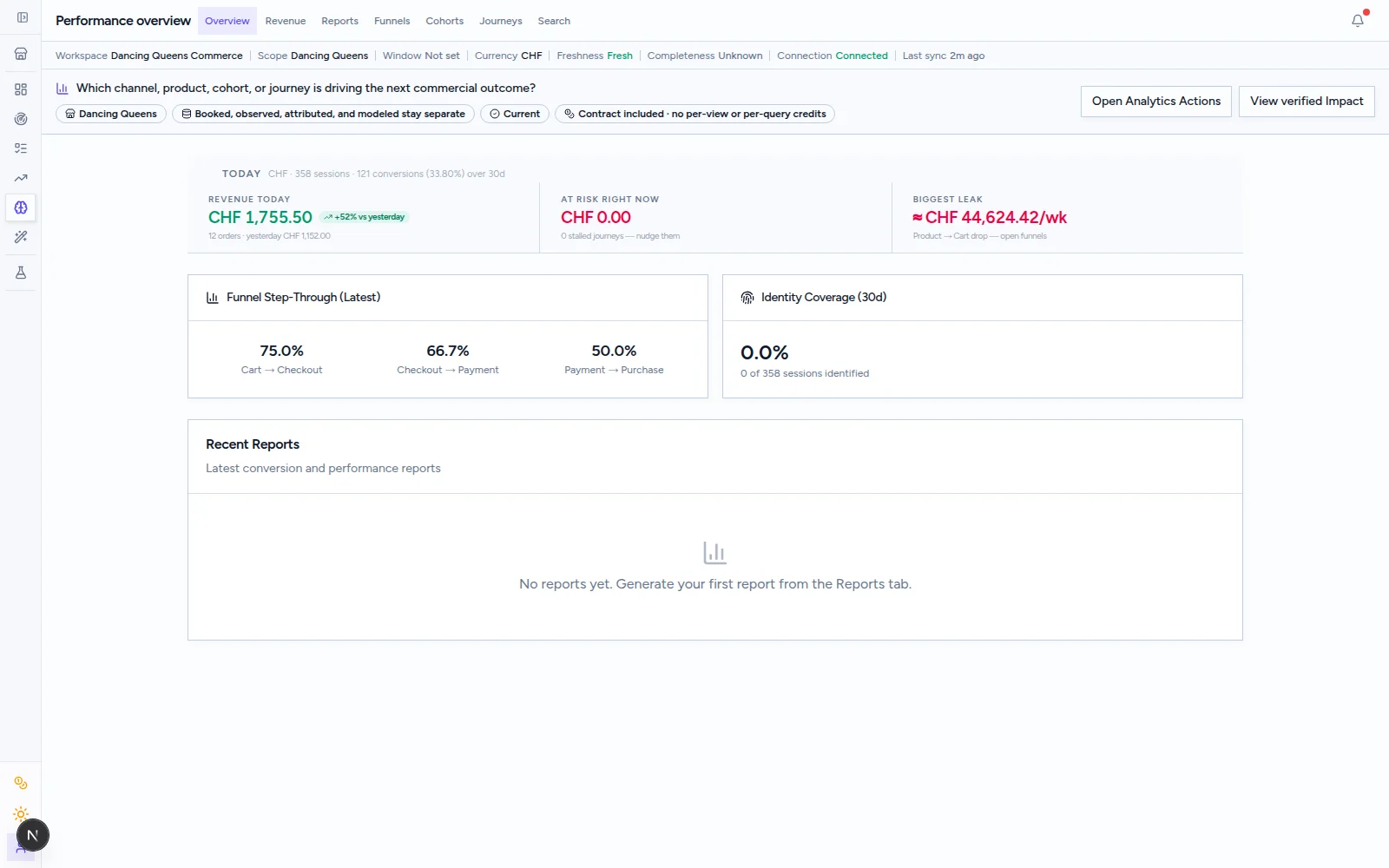
Real Beseam revenue analytics. Mixpanel-style event data stays attached to what the shopper chooses, action, and measured result.
FAQ
Before you change the stack.
Does Beseam replace Mixpanel?
Usually not. Mixpanel can remain the product event-analysis system teams already query. Beseam connects those events with product, store, discovery, reliability, and revenue evidence, then keeps the decision, action, and learning attached.
Can Beseam work without Mixpanel?
Yes. Beseam can use commerce, storefront, catalog, campaign, AI discovery, and other connected data. The exact coverage depends on the products and integrations enabled for the store.
What is the main difference?
Mixpanel is designed to query and explore product events. Beseam is designed to decide which commerce issue deserves attention, connect it to an action, and verify what changed.
Sources reviewed
Official product sources · July 25, 2026
Related comparisons
Keep the systems that work. Connect the evidence they leave apart.
In a 20-minute store review, we use one real finding to show how Beseam connects the tools already in place and keeps the loop moving from evidence to measured change.