Noibu finds the broken checkout. Beseam shows how that problem fits with everything else hurting the purchase.
Noibu monitors storefronts for technical errors, broken pages, and release regressions that block purchases, then estimates the revenue at risk. Beseam connects that reliability data with catalog, discovery, campaigns, shopper behavior, conversion, orders, and revenue so the break can be ranked against the other opportunities in the buying journey and checked again after action.
Ecommerce error monitoring · reviewed August 22, 2026
Choose Noibu when
Choose Noibu when the priority is catching technical errors, broken checkout flows, and release regressions before they cost revenue.
Choose Beseam when
Choose Beseam when a reliability issue needs to be weighed against catalog, discovery, campaign, and behavior problems competing for the same team's attention.
Use both when
Keep Noibu watching for technical errors and checkout breakage. Beseam connects that signal with the rest of the store and sales data, ranks what deserves action first, and keeps the change and measured result attached.
What it does not replace
What Beseam does not replace
Beseam is not a replacement for Noibu's technical error detection, checkout monitoring, or release-regression alerting.
In practice
What changes in practice.
Checked August 22, 2026
Typical owner
Ecommerce, product, engineering, and optimization teams responsible for storefront reliability and conversion friction.
Ecommerce or commerce operations, with product, growth, marketing, or engineering involved as the question requires.
Setup
Shopify stores can deploy through the Noibu app; other setups use Noibu's collection script and platform configuration.
Connect the relevant store and data sources around the business question being investigated.
Primary output
Revenue-prioritized ecommerce errors, session context, performance monitoring, and technical investigation evidence.
An evidence-backed decision, owned action, explicit brand-owner approval, and check again of the original problem.
Replace or keep?
Keep Noibu when deep ecommerce error detection and technical diagnosis are core requirements.
Use Beseam when reliability problems need to be weighed against discovery, behavior, campaigns, and orders before deciding what to fix first.
Pricing model
Sales-led business model; the reviewed official product material does not publish a self-serve plan price.
No public self-serve price on beseam.com; scope starts with a commerce review.
Choose the tool that fits the job.
Choose Noibu when
- Catching JavaScript errors, broken integrations, and checkout failures fast is the priority.
- You need automatic revenue-at-risk estimates tied to a specific technical error.
- Release regressions on the storefront need dedicated, always-on monitoring.
Choose Beseam when
- The reliability problem needs to be considered alongside catalog, AI discovery, campaign, and behavior data, not handled in isolation.
- The team wants to know which problem matters most instead of managing a separate alert queue for every system.
- The proposed change, owner, approval, and measured result must stay attached to the original problem.
Compare how each tool works.
Primary job
Detect technical errors, broken pages, and checkout failures, and estimate revenue at risk.
Combine reliability problems with the rest of store and sales data and rank the issue that should be acted on.
Evidence depth
Technical error detail down to the script, page, and browser affected.
Cross-system context tied to products, pages, queries, channels, incidents, and revenue periods.
Prioritization
Errors are ranked by estimated revenue impact within Noibu.
Revenue-sensitive issues rise above operational noise using evidence from every connected system, not only reliability.
Action
Fixes ship through engineering once the error is confirmed.
The affected product, page, query, or journey, owner, approval, and change status stay together.
Best relationship
Dedicated technical reliability and checkout monitoring source.
Keeps a Noibu-style reliability finding connected to what the shopper chooses, approved change, and measured result.
What happens after the signal appears?
Detect the break
An error monitor flags a broken page, script, or checkout step.
The same signal is connected to affected products, pages, campaigns, and order windows.
Decide what matters
The error is ranked by estimated revenue at risk within the monitoring tool.
The reliability data is considered alongside AI discovery, catalog, campaign, and behavior data to surface what deserves action first.
Make the change
Engineering ships a fix through the normal release process.
The affected product, page, query, or journey and proposed change remain explicit, with brand-owner approval before any customer-facing change is applied.
Check again
The team confirms the error rate drops after release.
Beseam checks again the original problem and keeps booked, attributed, observed, and modeled money separate.
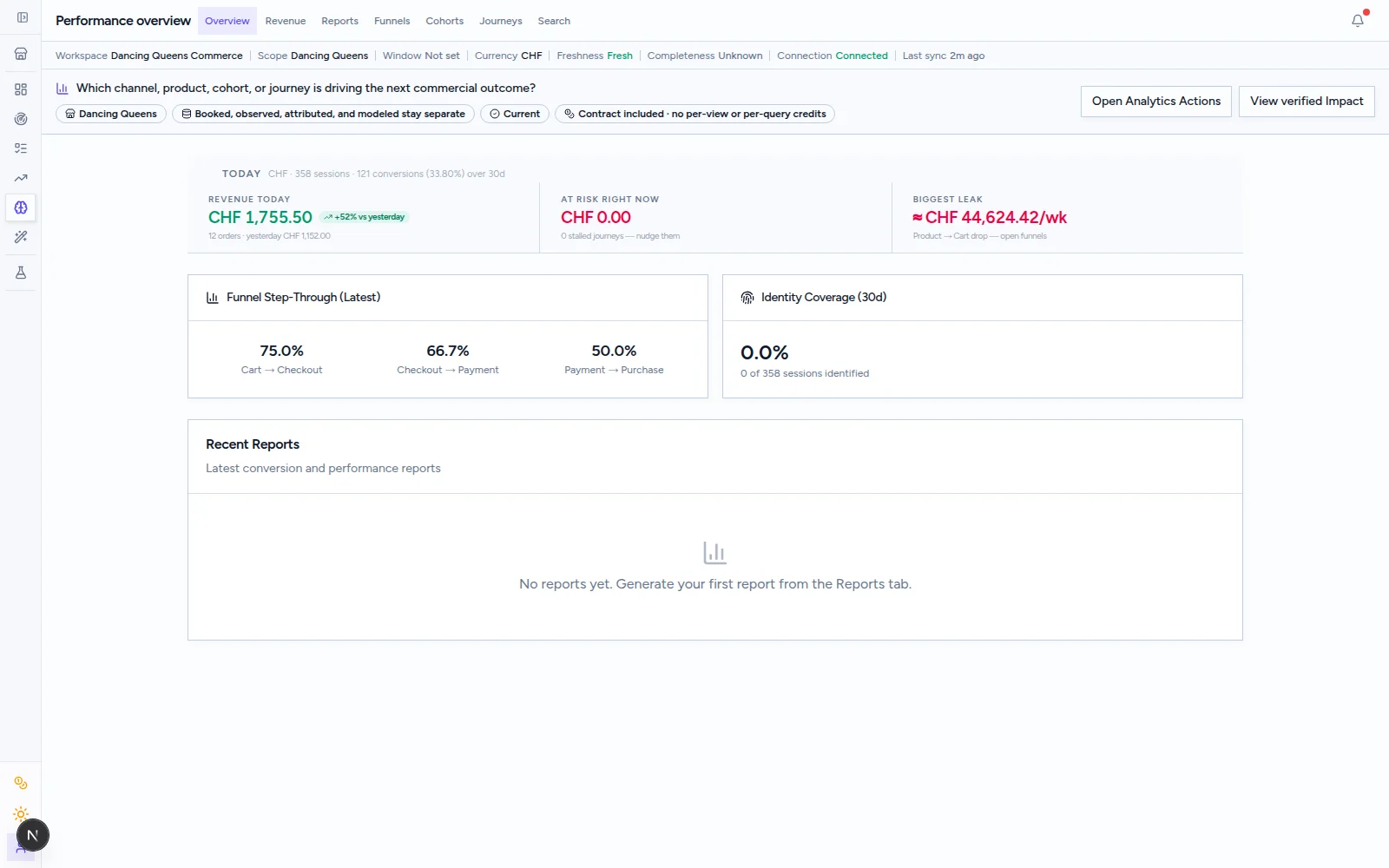
Real Beseam revenue analytics. A reliability problem for a dancewear store is considered alongside the other business data instead of being handled alone.
FAQ
Before you change the stack.
Does Beseam replace Noibu?
No. Noibu's technical error detection, checkout monitoring, and revenue-at-risk estimates stay valuable on their own. Beseam connects those findings to the other product, store, and shopper data, the decision about what to do, and what changed afterward.
Can Noibu and Beseam be used together?
Yes. Noibu can supply the reliability problem while Beseam considers it alongside catalog, discovery, campaign, and behavior data and keeps the resulting action and measured result attached.
Why rank a broken checkout against a catalog or campaign issue?
Because a team can only fix one thing first. Beseam compares business impact across systems so the highest-impact issue, reliability or otherwise, gets addressed first.
Sources reviewed
Official product sources · August 22, 2026
Related comparisons
Keep the systems that work. Connect the evidence they leave apart.
In a 20-minute store review, we use one real finding to show how Beseam connects the tools already in place and keeps the loop moving from evidence to measured change.