Athena tracks AI share of voice and recommends content. Beseam ties a missed shopping question to the product or store change and checks again.
Athena is an AI-search visibility platform centered on share of voice, competitor discovery, source analysis, and an Action Center for prioritized recommendations and content work. Beseam also watches AI discovery, then follows a missed shopping question into the product or page you can change. It prepares the change and asks the same question again afterward.
AI discovery & visibility · reviewed 22 August 2026
Beseam or Athena?
Choose Athena when
Choose Athena when AI share-of-voice monitoring and a specialist Action Center for turning visibility gaps into prioritized content recommendations are the main buying criteria.
Choose Beseam when
Choose Beseam when you need more than a visibility score: see which shopping question you missed, what you can change on the store, make the change with approval, and ask again.
Use both when
Keep Athena for specialist AI-visibility monitoring. Use Beseam when a missed shopping question needs to become a store change and then be checked again.
What Beseam does not replace
Beseam is not a one-for-one replacement for Athena's dedicated AI-visibility reporting, competitor benchmarking, or the specialist monitoring process teams already use there.
Choose the tool that fits the job.
Choose Athena when
- You want AI-search share of voice and competitor monitoring as a dedicated program.
- Source and citation analysis are central to how your team diagnoses why competitors appear.
- A specialist Action Center with prioritized recommendations and content drafting support fits your way of working.
Choose Beseam when
- A missing recommendation or citation needs to be tied to the right product, page, source, or catalog fact before anyone changes content.
- The team wants to see who was recommended and what product, store, shopper, or purchase data may help explain why.
- The original shopping question, proposed change, approval, application, and check afterward need to stay together.
Compare how each tool works.
Primary job
Athena
Measure AI-search share of voice and compare brand mentions, competitors, sources, and engine-level performance.
Beseam
Watch AI answers, tie a miss to the right product or page, make an approved change, and ask the same shopping question again.
Diagnosis
Athena
Use competitor and source evidence to identify visibility gaps and the content opportunities most likely to improve citation presence.
Beseam
Keep the answer, sources, competing brands, product facts, and page checks with the same question.
Action model
Athena
The Action Center prioritizes recommendations and supports content work intended to improve citation likelihood.
Beseam
Turn a finding into a specific change that waits for brand-owner approval instead of ending as another recommendation.
What happens after the answer
Athena
Specialist evidence about AI answers, mentions, citations, competitors, prompts, and sources.
Beseam
Connect the answer to product facts, the store, shopper behavior, checkout, orders, and the same question asked again.
Best relationship
Athena
Specialist AI-discovery monitoring and analysis.
Beseam
Carries a missed shopping question into an approved store change and checks it again.
What happens after the signal appears?
1Observe the answer
Athena
Track a prompt set and surface how often the brand appears, how it compares with rivals, and which sources are cited.
Beseam
Ask a real shopping question across the AI assistants you track and keep the answer, who was recommended, and the sources behind it.
2Understand the gap
Athena
Use competitor and source evidence to identify visibility gaps and the content opportunities most likely to improve citation presence.
Beseam
Tie the lost recommendation to the right product, page, source, claim, or store issue before choosing what to change.
3Change what you control
Athena
The Action Center prioritizes recommendations and supports content work intended to improve citation likelihood.
Beseam
Keep the proposed change, affected product or page, owner, and brand-owner approval with the original answer.
4Ask again
Athena
Continue monitoring the tracked prompt set and compare subsequent visibility metrics.
Beseam
Ask the same shopping question again and keep the before-and-after answers with the change that was made.
Beseam in practice
Real Beseam AI-discovery evidence. The question, answer, competing recommendation, supporting evidence, change, and check again stay connected instead of ending as a visibility score.
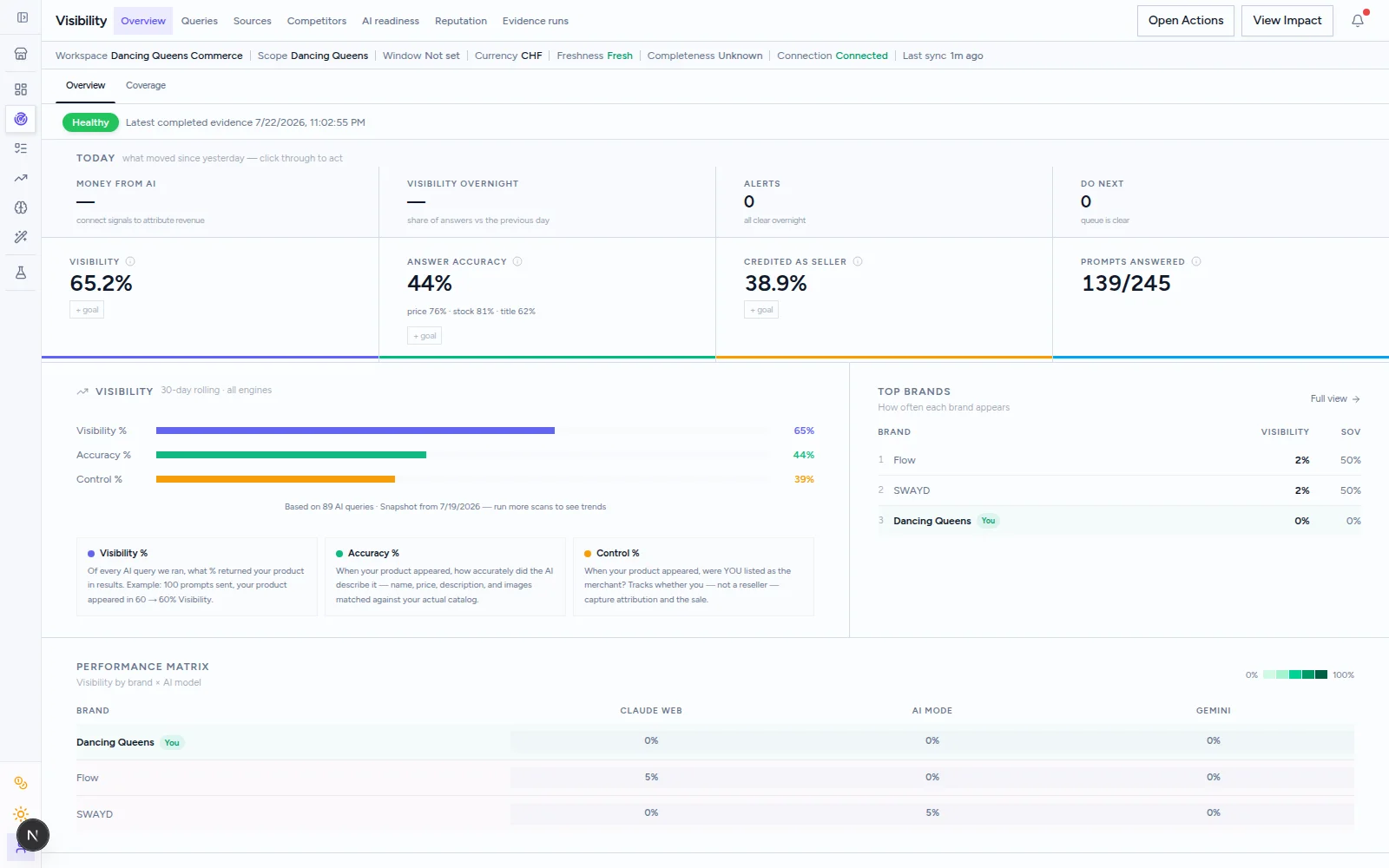
Before you change the stack.
Does Beseam replace Athena?
Not necessarily. Athena is a specialist AI-visibility platform. Beseam also watches AI discovery, then connects a useful miss with the product, store, shopper, and outcome evidence needed to decide what to do next.
Can Athena and Beseam be used together?
Yes. Athena can remain a specialist monitoring source while Beseam connects the finding to the affected product or journey, the approved work, and the relevant result afterward. Exact integration availability depends on the setup.
When should I choose Athena instead of Beseam?
Choose Athena when AI share-of-voice monitoring and a specialist Action Center for turning visibility gaps into prioritized content recommendations are the main buying criteria. Choose Beseam when the bigger problem is carrying discovery evidence into product, store, shopper, and business decisions rather than stopping at the monitoring layer.
Sources reviewed
Official product sources · 22 August 2026
Keep the systems that work. Connect the evidence they leave apart.
In a 20-minute store review, we use one real finding to show how Beseam connects the tools already in place and keeps the loop moving from evidence to measured change.