How to write product descriptions AI assistants recommend
By The Beseam team · Updated · 7 min read
Why do product descriptions matter for AI search?
When a shopper asks an AI assistant for “trail running shoes for wide feet under €150”, the assistant has to decide which products fit. It can only do that with facts: is the shoe made for trails, does it come in a wide fit, what does it cost? If your description does not say so, the assistant cannot match your product, however good it is.
Search engines could rank a page on keywords and links. AI assistants read your page like a careful shopper and pick a handful of products that clearly fit. That rewards specific, complete product information more than ever.
What does an AI assistant look for in a product description?
- The use case. What the product is for: trail running, a summer wedding, standing all day, photo editing.
- Who it suits. Wide feet, sensitive skin, tall men, beginners, small rooms.
- The attributes shoppers compare on. Materials, ingredients, dimensions, specs, battery life, weight.
- Sizing or compatibility advice. Runs small or true to size; works with iOS and Android.
- What makes it different. One or two concrete facts, not superlatives.
- Practical details. Care instructions, what is in the box, certifications.
Before and after: three examples
Footwear
| Before | After |
|---|---|
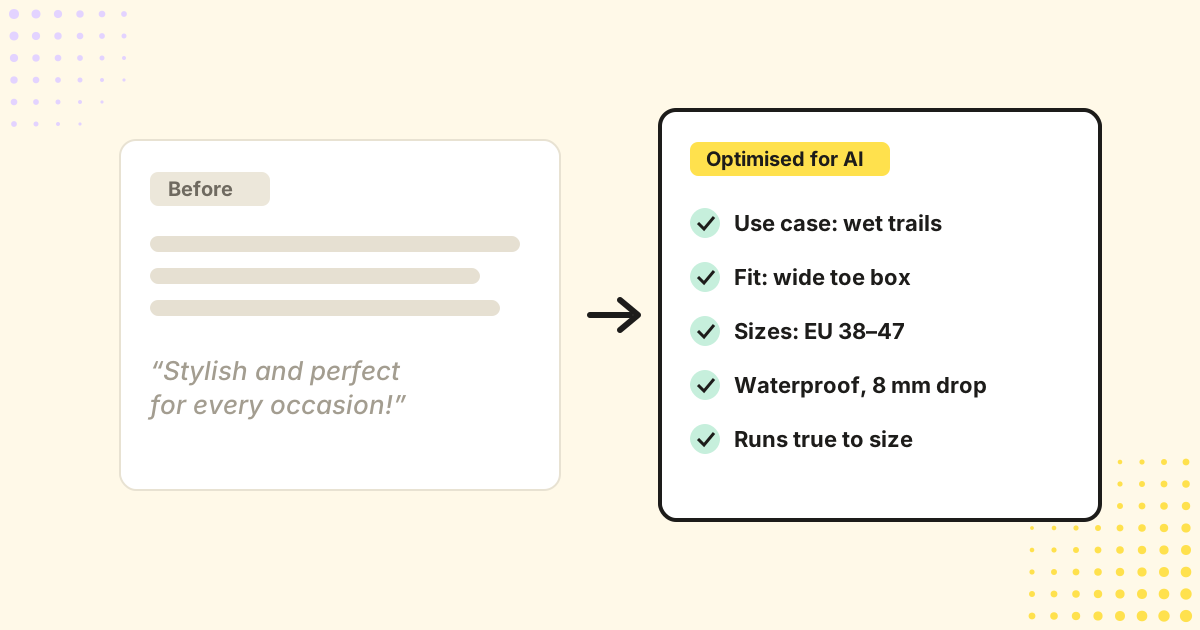
| Our most popular running shoe. Stylish, comfortable and perfect for every run! | A waterproof trail running shoe with a wide toe box and an 8 mm drop, made for wet and muddy trails. EU 38–47, in standard and wide fit. Runs true to size. |
Beauty
| Before | After |
|---|---|
| Our iconic glow serum. A little bottle of magic for radiant skin. | A 15% vitamin C serum with hyaluronic acid for dull, uneven skin. Lightweight and fragrance-free, for normal to combination skin. Apply in the morning before sunscreen. |
Electronics
| Before | After |
|---|---|
| Experience sound like never before. Premium audio and all-day comfort. | Over-ear headphones with active noise cancelling and up to 50 hours of battery life with ANC on. Bluetooth 5.3, multipoint pairing with iOS and Android, USB-C fast charging. |
In each case, the “after” version answers the questions a shopper would ask an assistant. Find more examples per category on our pages for footwear, fashion, beauty and electronics.
How to write an AI-ready product description, step by step
- List the questions. Write down five questions shoppers ask before buying this product. Check your customer service emails and reviews for the real wording.
- Open with the answer. Start with one sentence that says what the product is, what it is for and who it suits.
- Add the comparison facts. Materials, sizes, specs: the attributes a shopper would use to choose between two products.
- Give advice. Sizing, fit, compatibility or how to use it, in plain words.
- Cut the filler. Remove phrases that would fit any product, such as “high quality” or “perfect for everyone”.
- Match your product data. Put the same facts in your product attributes and structured data, for every variant.
Keep it readable
Writing for AI does not mean writing for robots. Assistants reward the same thing shoppers do: clear, specific information. A description that answers questions converts better on your own site too.
Common mistakes that keep products out of AI answers
- Supplier descriptions copied as-is. They match hundreds of other stores and rarely answer shoppers' questions.
- Key facts only in images. Size charts and ingredient lists as images are hard for AI to read. Put them in text.
- Fit advice only in reviews. If “size down” only appears in reviews, state it in the description.
- Description and data disagree. When the text says one thing and the product data another, assistants trust neither.
- Keyword stuffing. Repeating a phrase does not help an assistant understand the product. Facts do.
How do you do this for a whole catalogue?
Start with the products that matter most: your bestsellers and the products closest to winning important shopping questions. Fix those first, measure the effect, then work down the list.
Beseam's product description optimisation does this for you: it finds missing facts across your catalogue, suggests improved descriptions and product data, and ranks them by expected revenue impact, so you approve the changes that matter first.
Frequently asked questions
How long should a product description be for AI search?
Long enough to answer the questions shoppers ask, and no longer. For most products that is two to four short paragraphs or a short paragraph plus a list of key facts. Completeness matters more than length.
Should I write separate descriptions for AI and for shoppers?
No. AI assistants read the same page your shoppers do, and both reward clear, specific facts. One good description serves both.
Can I use AI to write my product descriptions?
Yes, as long as the facts are right. AI can help structure and rewrite descriptions at scale, but every claim, size and spec should be checked against your real product data before it goes live.
Do product descriptions affect Google rankings too?
Clear, specific and original product information is what both search engines and AI assistants reward, so improving descriptions for AI and for Google points in the same direction.
Which products should I optimise first?
Start with bestsellers and products in categories where shoppers ask assistants for advice, such as footwear, beauty and electronics. Those are where a better match brings the most revenue.